Cloudflare recently introduced a new content management system called EmDash. Some people are already calling it a “WordPress replacement” or even the future of websites.
That sounds exciting.
But when you look closer, the story is very different.
Yes, EmDash brings some fresh ideas. It focuses on security, speed, and modern development tools. These are real improvements. But at the same time, it misses many things that everyday users actually need. Most website owners are not developers. They don’t care about infrastructure or system design. They care about getting a website online, adding content, and growing their business.
Right now, EmDash is not built for that.In this article, we’ll go through 10 clear reasons why EmDash is not ready to replace WordPress — at least not yet.
| Feature | WordPress | EmDash |
|---|---|---|
| Ease of Use | Very easy, beginner-friendly | Requires technical knowledge |
| Setup | 1-click install | Manual setup (GitHub, config) |
| Website Builder | Yes (Elementor, Divi, etc.) | Not available yet |
| Plugins & Features | Thousands available | Very limited |
| Beginner Friendly | Yes | No |
| Business Tools | Strong ecosystem | Still missing key tools |
| Stability | Proven and reliable | Early beta (0.1) |
| Community | Huge global community | Very small (for now) |
1. EmDash is Built for Developers, Not Everyday Users
The biggest issue with EmDash is simple: it is not made for regular people.
When you look at how it’s presented, most of the focus is on technical topics like security layers, architecture, and system design. These are things developers care about.
But most users are not developers.
A small business owner doesn’t want to think about how a system works behind the scenes. They want to:
- add a new page
- update text
- upload images
- get leads
WordPress understands this very well. That’s why it became so popular. It made websites easy for everyone.
EmDash, on the other hand, feels like it was built from the inside out — starting with technical problems instead of user needs.
That’s fine for developers. But it’s a big problem for everyone else.
2. EmDash setup is too complicated for regular users
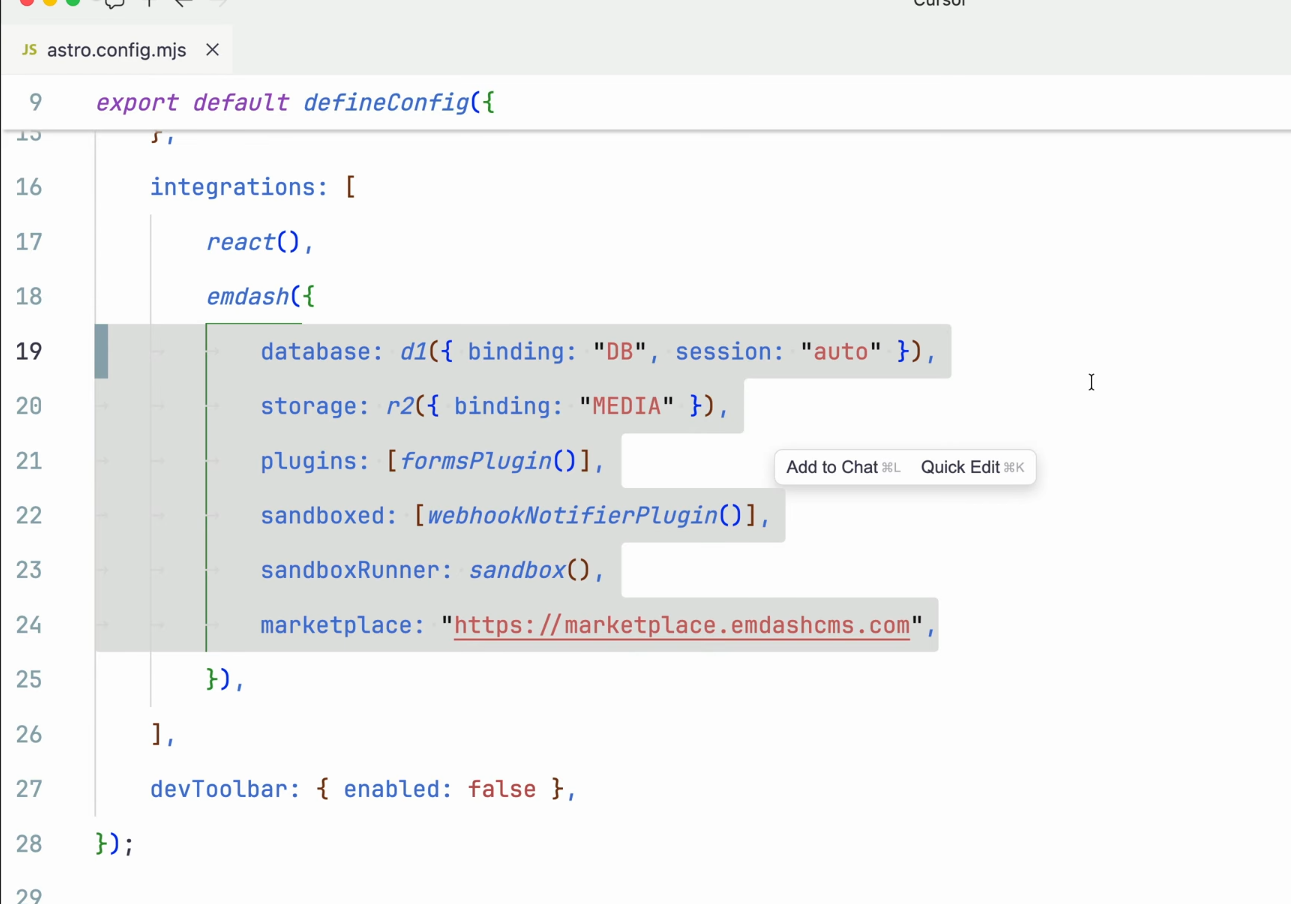
Getting started with EmDash is not simple. Instead of just installing a system and logging in, you often need to:
- connect to a GitHub repository
- configure a database
- handle deployment settings
For many users, this is already too much.
Compare that with WordPress. With most hosting providers, you can install WordPress in a few clicks. After that, you log in and start building your site right away. No coding. No setup headaches.
This is a huge difference. If a tool is hard to start with, most people will never even get to use it properly.
3. EmDash is not a real website builder YET
Modern website tools are visual.
People expect to drag and drop elements, change layouts, and see results instantly. Tools like Elementor, Divi, or even the WordPress block editor make this easy.
EmDash does not offer that — at least not yet.
Yes, it has a content interface. But it doesn’t have a full visual builder where you can design pages without touching code.
That means:
- building layouts is harder
- customizing design takes more effort
- beginners will struggle
For developers, this may not be a problem.
But for most users, it is.
Today, a CMS without an easy builder feels incomplete.
4. You Still Need the Command Line
This is one of the biggest barriers.
To work with EmDash, you often need to use the command line (CLI). That means typing commands into a terminal to make things happen.
For developers, this is normal. For everyone else, it’s confusing and frustrating.
Most people don’t want to:
- remember commands
- deal with errors
- fix setup issues manually
They just want buttons and simple options.
WordPress moved away from this years ago. Everything important can be done through a visual dashboard.
EmDash hasn’t reached that point yet.
As long as the command line is required, it will be very hard for beginners to use it.
5. Limited Plugins and Features
One of the biggest strengths of WordPress is its ecosystem.
There are thousands of plugins that can add almost any feature you need:
- SEO tools
- contact forms
- booking systems
- online stores
- memberships
Whatever you want to build, there is already a solution.
EmDash does not have this — at least not yet. It is still new, which means:
- fewer tools
- fewer integrations
- fewer ready-made solutions
This creates a problem.
Instead of installing a plugin, you may need to build features yourself or rely on custom development. That takes time, money, and technical knowledge.
For most users, that’s not practical.
Starting an EmDash Project?
If you’ve decided to switch to EmDash or you’re planning a new EmDash project, get a free estimate from 3 trusted developers and understand what it will take before you start.
6. Security Is Better — But Not a Game Changer
One of the main things EmDash tries to fix is plugin security.
In WordPress, plugins can access a lot of the system. This means that if a plugin has a flaw, it can affect the whole website.
EmDash improves this by limiting what extensions can do. That’s a good idea.
But here’s the reality.
Security is important, but it’s not the main reason people choose a CMS.
Most users care more about:
- how easy it is to use
- how fast they can build a page
- whether it helps them get traffic and customers
Also, not every WordPress plugin is dangerous. Many issues are low risk or affect only a small number of sites.
So while EmDash improves security, this alone is not enough to replace everything WordPress already offers.
7. Not Ready for Business Needs
A CMS is not just for writing content.
Most people use it to run a business.
That means they need features like:
- booking systems
- contact forms
- email integrations
- SEO tools
- analytics
WordPress handles all of this very well through plugins and themes.
EmDash is not there yet.
Right now, it focuses more on how the system works behind the scenes, not on what businesses need every day.
But business owners don’t care about infrastructure.
They care about results:
- getting leads
- making sales
- growing traffic
If a platform doesn’t help with that, it’s not ready for real use.
8. It’s Still in Early Beta (Version 0.1)
This is very important.
EmDash is still in an early stage.
Version 0.1 means:
- things can break
- features are missing
- updates will change how it works
This is normal for a new product.
But it also means it’s not ready for production websites. If you are running a real business, you need stability.
You can’t risk:
- downtime
- bugs
- unexpected changes
WordPress, on the other hand, has been around for years. It’s stable, tested, and reliable.
EmDash may get there one day. But today is not that day.
9. Smaller Community and Support
One of the biggest advantages of WordPress is its community.
There are:
- millions of users
- thousands of developers
- endless tutorials and guides
If something goes wrong, you can find help quickly.
With EmDash, the situation is very different. It is new, so:
- fewer people use it
- fewer tutorials exist
- less support is available
This makes everything harder.
Even small issues can take a long time to solve because there are fewer resources.
For beginners, this can be very frustrating.
10. Switching From WordPress Would Be Hard
Even if EmDash improves, switching is not easy.
Most WordPress sites rely on:
- plugins
- themes
- custom setups
- existing workflows
Moving all of that to a new system takes time and effort.
You may need to:
- rebuild pages
- replace features
- learn new tools
For most businesses, this is not worth it.
If your current setup works, there is no strong reason to move.
That’s why WordPress remains the safe and practical choice
Don’t Start Your EmDash Project Blind
Avoid costly mistakes. Get a FREE estimate and technical feedback from 3 developers before you build.
EmDash is an interesting project.
It brings new ideas, especially around security and modern development.
But it is still early. Right now, it:
- focuses more on developers than users
- lacks important features
- is not easy to use
- is not ready for real business needs
WordPress is not perfect.
But it works.
It is simple, flexible, and supported by a huge ecosystem.
For most people, that matters more than new technology. In the future, EmDash could become a strong alternative.
But today, WordPress is still the better choice for the vast majority of users.
Frequently Asked EmDash Questions
1. Is EmDash better than WordPress?
Right now, no. EmDash introduces some interesting ideas, especially when it comes to security and modern development. However, WordPress is still a more complete and practical solution for most users.
WordPress offers thousands of plugins, themes, and built-in features that allow you to build almost any type of website without much technical knowledge. EmDash, on the other hand, is still very limited in comparison.
For developers, EmDash may feel cleaner and more modern. But for everyday users and businesses, WordPress is still the better and safer choice.
2. Can beginners use EmDash?
At this stage, EmDash is not beginner-friendly. Setting up a project often involves working with tools like GitHub, configuring environments, and sometimes using the command line.
Most beginners are looking for something simple, where they can log in, click around, and build their site visually. WordPress provides that experience with its dashboard, themes, and page builders.
Until EmDash becomes easier to set up and use, it will remain a tool mostly for developers and technical users.
3. Is WordPress still a good choice in 2026?
Yes, absolutely. WordPress is still one of the most widely used and trusted platforms in the world.
It continues to evolve, with improvements in performance, editing experience, and security. At the same time, it keeps its biggest strengths:
- flexibility
- ease of use
- large ecosystem
Whether you are building a blog, a business website, or an online store, WordPress still offers everything you need in one place.
For most users, it remains the most practical and reliable option.
4. Should I switch from WordPress to EmDash?
In most cases, switching is not worth it right now.
If your WordPress site is already working well, moving to EmDash would require rebuilding many parts of your setup. This includes design, features, and integrations that you may already rely on.
On top of that, EmDash is still new and evolving. This means you may run into missing features, limited support, or unexpected changes.
Unless you have a very specific technical reason to switch, it’s usually better to stay on WordPress and continue improving your existing site.
5. Will EmDash replace WordPress in the future?
It’s possible, but it will take time.
For EmDash to compete with WordPress, it needs to become easier to use, build a larger ecosystem, and prove that it can handle real-world websites reliably.
WordPress has had many years to grow, and it benefits from a huge community of developers, designers, and users.
EmDash has potential, but it is still at the very beginning. If it continues to improve, it could become a strong alternative in the future. But for now, WordPress remains the leading choice.
Need Help With WordPress?
Whether you’re fixing issues, improving your site, or planning something new, get a free estimate from 3 trusted WordPress experts. No obligation.