Lets Blog WordPress WordPress Theme
by ThemeGoods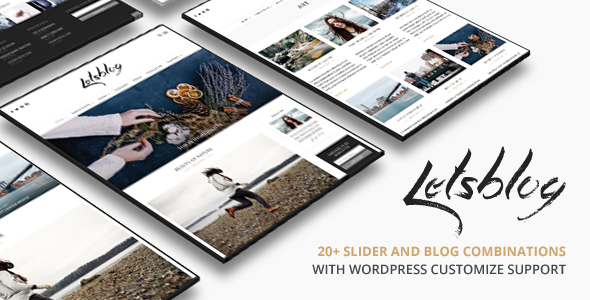
Stuck on your Lets Blog WordPress WordPress theme? Let's fix it.
No endless back-and-forth. Just send us the details and we'll get it done.
No obligation · Replies within 1 hour · Quote within 1 day
Setup · Customization · Bug fixes · WooCommerce integration
About Lets Blog WordPress WP Theme
Lets Blog WordPress is a theme by ThemeGoods built specifically for content-focused websites. It ships with a clean, minimal layout that puts the writing front and centre, making it a solid choice for personal bloggers, freelance writers, and small editorial teams.
The theme supports the WordPress block editor and includes multiple homepage layouts, customisable header styles, and a handful of post grid options. It is lightweight compared to many multipurpose alternatives, which helps with initial load times out of the box.
ThemeGoods has a track record of well-coded themes with decent documentation. Lets Blog WordPress follows that pattern — the options panel is straightforward, and most users can get a site live without touching code. Where it falls short is in advanced layout control and third-party plugin compatibility, which is where a specialist often becomes necessary.
Get matched with a Lets Blog WordPress developer in under one day
Tell us about your Lets Blog WordPress project. Small fixes, Lets Blog WordPress theme customization, or a full website build, whatever you need, we've got it covered.
We'll connect you to the right Lets Blog WordPress developers, define the scope, and get everything 100% clear.
You'll get one estimate, hire your preferred developer, and start collaborating.
Most Lets Blog WordPress issues — broken layouts after an update, plugin conflicts, slow load times — have straightforward fixes if you know where to look. Finding someone qualified is the harder part.
Codeable connects you with vetted WordPress developers who have real experience with themes like Lets Blog. You post your project, get matched within 24 hours, and receive a free estimate before committing. No bidding wars, no unvetted freelancers. Just developers who have been screened and reviewed by other clients.
Pros
- Lightweight codebase keeps initial page load times low without extra optimisation
- Multiple pre-built homepage layouts give a starting point for different blog styles
- Clean block editor support means content editing works without plugin dependencies
- Straightforward customiser panel reduces setup time for non-technical users
- ThemeGoods provides documentation and update history, making long-term maintenance easier
Cons
- Limited layout control for category and archive pages compared to more flexible themes
- No built-in mega menu or complex navigation options for larger sites
- Widget areas are fixed — adding new sidebar or footer zones requires custom code
- WooCommerce support is minimal; the theme is not suited for blogs with a shop attached
- Third-party page builder compatibility is inconsistent and not officially supported
Who is Lets Blog WordPress for?
Personal Lifestyle Blog
Lets Blog suits personal lifestyle bloggers who want a clean reading experience without a heavy theme. The minimal layout keeps focus on posts and featured images. A Lets Blog WordPress developer can add custom category colour coding, author bio sections, and related post modules to make the site feel more tailored without adding unnecessary bulk.
Freelance Writer Portfolio
Writers who want to showcase published work alongside a blog find Lets Blog a workable base. The grid layouts handle mixed content types well. A Lets Blog WordPress specialist can build a custom portfolio post type that sits alongside the blog, with a filtered display so visitors can browse clips by topic or publication without leaving the site.
Niche News or Editorial Site
Small editorial teams running a niche news site benefit from Lets Blog’s structured post layouts. Category pages can be set up to mimic a simple magazine style. With developer input, you can add breaking news tickers, contributor author pages, and refined ad placement zones that the default theme does not include out of the box.
Food or Travel Blog
Food and travel blogs rely heavily on visual presentation. Lets Blog’s featured image handling and post grid options support image-forward content well. A Lets Blog WordPress expert can implement custom recipe or itinerary post formats, integrate a ratings plugin, and set up schema markup so posts are eligible for rich results in Google search.
Newsletter-Backed Content Site
Blogs that drive newsletter sign-ups need inline opt-in forms, sticky header CTAs, and post-specific landing pages. Lets Blog can support this with the right setup. A developer can connect ConvertKit, Mailchimp, or similar tools directly into the theme, creating seamless sign-up touchpoints that match the site design rather than looking like bolted-on widgets.

Customizing Lets Blog WordPress
Out of the box, Lets Blog WordPress gives you colour controls, font selection, header layout options, and basic widget areas. That covers most needs for a simple blog. If you want something beyond the default — custom post layouts, unique category pages, or a non-standard homepage structure — you will quickly hit the limits of the built-in customiser.
A Lets Blog WordPress expert can extend the theme without modifying core files, using child themes and targeted CSS or PHP to add features that the native options panel does not expose. Common requests include custom author boxes, modified archive templates, sticky sidebar ads, and integration with newsletter or membership plugins.
Working with a developer also means changes are done cleanly, so future theme updates do not wipe your work. If you have specific design requirements, hiring a Lets Blog WordPress specialist saves significant trial-and-error time.
Recommended plugins for Lets Blog WordPress
Lets Blog WordPress works well with a focused plugin stack. For caching and image optimisation, tools like WP Rocket or Perfmatters pair cleanly with the theme’s lightweight base. A developer can fine-tune these for the specific assets Lets Blog loads — full details on that at our WordPress performance service.
On the search side, the theme’s default meta output is basic. Adding Rank Math or Yoast SEO and configuring schema, breadcrumbs, and Open Graph properly makes a measurable difference. See our WordPress SEO service for how that is handled in practice.
Not sure which plugins to use? This WordPress plugins directory covers the most popular options with reviews and setup guides.
Lets Blog WordPress common issues
Lets Blog WordPress header not showing correctly after update
Header display issues after a theme update are usually caused by a conflict between cached styles and the new CSS. Clear your caching plugin and browser cache first. If the issue persists, check whether a child theme stylesheet is overriding the updated header rules. Reverting to the parent theme temporarily will confirm the source. If custom header code was added directly to the parent theme files, those changes will have been overwritten by the update.
Lets Blog WordPress featured image not displaying on homepage
If featured images are missing from the homepage grid, the first check is whether the images are actually set on the posts themselves — easy to miss when bulk-importing content. If images are set but not showing, check the theme’s image size settings under Settings > Media and run a thumbnail regeneration using a plugin like Regenerate Thumbnails. Lets Blog registers its own image sizes, and mismatches cause blank image containers.
Lets Blog WordPress fonts not loading or reverting to default
Font issues in Lets Blog WordPress are commonly caused by Google Fonts loading failures due to privacy plugins or firewall rules blocking external requests. Check your browser console for blocked font URLs. Alternatively, if you have changed fonts via the customiser and they are reverting, this points to a caching issue. Flush all cache layers including server-side cache if your host provides one, then re-save your customiser settings.
Lets Blog WordPress sidebar disappearing on single posts
A disappearing sidebar on single posts is usually a template-level setting. In Lets Blog, check the post’s sidebar layout option in the post editor — some layouts default to full-width. If the setting is correct but the sidebar still does not show, a plugin adding a custom body class may be overriding the layout. Temporarily deactivate plugins one by one to isolate the conflict. Our WordPress bug fixing service can handle this quickly.
Lets Blog WordPress mobile menu not opening or closing
Mobile menu failures in Lets Blog typically trace back to a JavaScript conflict with another plugin or a cached version of a script. Open your browser’s developer tools on mobile simulation, check the console for JS errors, and identify which script is throwing the error. Common culprits are slider plugins and social sharing scripts. Deactivating them one at a time will isolate the conflict. Updating jQuery dependencies can also resolve this.
Lets Blog WordPress slow loading on mobile devices
Slow mobile performance on a Lets Blog WordPress site is often caused by unoptimised images and render-blocking scripts. The theme itself is lightweight, so the issue is usually in the content or plugin layer. Run a PageSpeed Insights test and check which resources are flagged. Compress images using WebP format, defer non-critical scripts, and consider a CDN for static assets. A full audit from our WordPress bug fixing service can identify the specific bottlenecks on your install.
Lets Blog WordPress social icons not appearing in header
Social icons that fail to appear in the Lets Blog header are almost always a configuration issue rather than a bug. The theme requires you to set up social links via the customiser under a specific social links section — they will not appear until URLs are entered there. If links are entered but icons still do not show, check whether an ad blocker or privacy browser extension is hiding the icon font. Test in an incognito window without extensions.
Lets Blog WordPress comments section layout broken
A broken comments layout in Lets Blog is often caused by a comments plugin adding its own markup that conflicts with the theme’s default comment template. Plugins like Jetpack Comments or Disqus replace the native comment form entirely and may not inherit the theme’s styles. Check which comments plugin is active and whether disabling it restores the native layout. If you need a custom comments style, a developer can write targeted CSS to reconcile the plugin output with the theme’s design.
Lets Blog WordPress category page showing wrong posts
Category pages showing wrong posts usually points to a taxonomy assignment issue. Check that posts are assigned to the correct category and not just tagged with a similar term. If posts are assigned correctly but still missing, check whether a custom query plugin or a modified archive template is filtering results unexpectedly. Also confirm that your reading settings under Settings > Reading are not limiting the number of posts per page lower than expected. Our WordPress bug fixing service can trace query issues directly in the database.
Lets Blog WordPress customiser changes not saving
Customiser changes that fail to save in Lets Blog WordPress are often caused by a PHP memory limit being hit during the save process, a security plugin blocking the AJAX request, or a permissions issue with the uploads folder. Check your server’s PHP error log for warnings around the time you attempted to save. Temporarily disabling your security plugin and trying again will confirm if that is the cause. Increasing PHP memory to at least 256MB resolves many save failures.
Lets Blog WordPress FAQ
Yes, Lets Blog WordPress works with the Gutenberg block editor. Standard blocks render correctly within the theme’s content area. However, some advanced block plugins that output complex layouts may not inherit the theme’s typography and spacing styles without additional CSS adjustments from a developer.
Lets Blog WordPress is not built for WooCommerce. Basic WooCommerce pages will load, but the theme has no dedicated shop, product, or cart templates. The result looks unstyled. If you need a blog alongside an online shop, a different theme or a significant amount of custom development work would be needed to make it functional.
Create a new folder in your wp-content/themes directory, add a style.css file with a Template header pointing to Lets Blog WordPress, and create a functions.php file that enqueues the parent stylesheet. Any customisations go into this child theme. This protects your changes from being overwritten when ThemeGoods releases a theme update.
Lets Blog WordPress supports multiple authors through WordPress’s native user roles. Each author can have a profile with bio and avatar. The theme displays author information on posts, though the author archive page styling is basic. A Lets Blog WordPress specialist can build out more detailed author profile pages if your site has a team of contributors.
The theme outputs reasonably clean HTML, which is a good foundation. However, structured data, Open Graph tags, and advanced meta configuration are not built in. Pairing Lets Blog with an SEO plugin like Rank Math and configuring it properly is necessary for competitive search performance. See our WordPress SEO service for specifics.
Go to Appearance > Customise > Site Identity and upload your logo file there. Lets Blog WordPress uses the standard WordPress logo uploader. For best results, use an SVG or a PNG with a transparent background. If the logo appears too large or misaligned, a small CSS adjustment targeting the site logo container will fix the sizing.
Lets Blog can handle a light magazine layout using its post grid homepage options. It is not a full magazine theme, so complex multi-column category sections and breaking news layouts are not natively available. For a true magazine structure, a developer would need to build custom templates, or you would be better served by a theme designed specifically for that purpose.
Yes, Lets Blog WordPress works with major caching plugins including WP Rocket, W3 Total Cache, and LiteSpeed Cache. After installing a caching plugin, clear the cache after any customiser change to avoid stale styles appearing on the front end. If you notice layout issues after enabling caching, check whether CSS or JS minification is breaking theme-specific scripts.
ThemeGoods offers support through their ThemeForest comments section and a dedicated support forum depending on where you purchased the theme. Support is included for a period after purchase. For issues outside their support scope — custom development, plugin conflicts, or performance work — a Lets Blog WordPress developer through Codeable is a faster route.
Yes, you can migrate an existing WordPress blog to Lets Blog WordPress by switching themes and then adjusting settings to match your previous layout. Post content, categories, and tags carry over automatically. Featured images and widget configurations will need manual setup. If migrating from a different CMS entirely, see our WordPress migration service for a structured approach.
Hire a Lets Blog WordPress Developer
Whether you need a layout customised, a plugin integrated, or a persistent bug fixed, a Lets Blog WordPress developer can handle it without disrupting your live site. Work is scoped clearly upfront, so you know exactly what you are paying for before anything starts.
Get a Free Estimate and describe what you need. A specialist will review your project and come back with a clear plan and price — no obligation to proceed.
You'll need a free Codeable account so developers can ask questions and send their quotes.