The Landscaper WordPress Theme
by QreativeThemes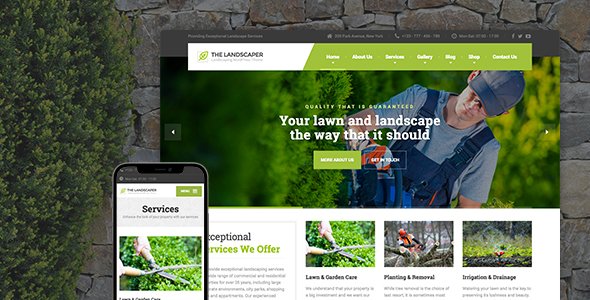
Stuck on your The Landscaper WordPress theme? Let's fix it.
No endless back-and-forth. Just send us the details and we'll get it done.
No obligation · Replies within 1 hour · Quote within 1 day
Setup · Customization · Bug fixes · WooCommerce integration
About The Landscaper WP Theme
The Landscaper is a WordPress theme by QreativeThemes built specifically for landscaping companies, garden designers, lawn care services, and outdoor contractors. It ships with a visual page builder, service area layouts, project portfolio sections, and a contact form designed to generate leads.
The theme is built on a clean, image-forward framework that puts outdoor project photography front and center. Typical site sections include services, team profiles, project galleries, testimonials, and a quote request form. It works with popular plugins like WooCommerce, WPML, and Elementor, making it adaptable for businesses that want to sell products or operate in multiple languages.
QreativeThemes packages the theme with detailed documentation and regular updates, which helps with long-term compatibility with WordPress core releases.
Get matched with a The Landscaper developer in under one day
Tell us about your The Landscaper project. Small fixes, The Landscaper theme customization, or a full website build, whatever you need, we've got it covered.
We'll connect you to the right The Landscaper developers, define the scope, and get everything 100% clear.
You'll get one estimate, hire your preferred developer, and start collaborating.
Most The Landscaper customization jobs are straightforward for an experienced developer but time-consuming for someone without WordPress expertise. Codeable connects you with vetted WordPress specialists who have worked on landscaping and contractor sites before. You post your project, get a clear estimate, and only proceed if the scope and price work for you. No cold outreach, no vetting developers yourself, no risk.
Pros
- Purpose-built layouts for landscaping and garden service businesses
- Strong portfolio and project gallery sections with before/after image support
- Compatible with Elementor, allowing drag-and-drop page editing without custom code
- Built-in quote request and contact form sections designed to capture leads
- Regular updates from QreativeThemes keep it compatible with current WordPress versions
Cons
- Demo content import can be unreliable on some hosting environments, requiring manual setup
- Default typography and color options are limited without custom CSS or a child theme
- No built-in booking or scheduling system; requires a third-party plugin for appointments
- Portfolio filtering requires additional plugin setup rather than working out of the box
- Page load speed needs attention on image-heavy installs without performance optimization
Who is The Landscaper for?
Lawn Care & Mowing Services
The Landscaper’s service layout and quote form sections are a good fit for lawn care operators who need a simple site that shows service areas, pricing tiers, and a way for customers to request a visit. A The Landscaper specialist can add postcode-based service area logic or connect the form to a CRM.
Garden Design Studios
Garden designers rely on strong portfolio presentation. The Landscaper’s project gallery sections support full-width photography and can be extended with filtering by garden style or project size. A The Landscaper developer can build custom taxonomy filters and detailed project case study templates.
Landscape Construction Contractors
Landscape construction companies often need a site that handles both residential and commercial audiences. The Landscaper can be structured with separate service tracks, testimonial sections by project type, and an inquiry form that routes to the right contact. Custom work from a developer makes this cleaner.
Tree Surgery & Arborist Businesses
Tree surgeons and arborists need clear service listings, accreditation badges, and emergency contact options. The Landscaper’s flexible layout supports these with some configuration. A The Landscaper expert can add schema markup for local services and set up a prominent emergency call-out button.
Outdoor Living & Patio Installers
Outdoor living installers selling decking, patios, or garden rooms benefit from The Landscaper’s visual, image-led format. Combined with WooCommerce for product browsing or a quote calculator plugin, a The Landscaper developer can turn the theme into a proper sales and inquiry tool.

Customizing The Landscaper
Out of the box, The Landscaper gives you color palettes, Google Fonts integration, header layout options, and homepage section toggles. Most changes are handled through the WordPress Customizer, which keeps things accessible for non-developers.
Beyond those defaults, a lot of customization work requires either custom CSS, child theme development, or plugin integration. A The Landscaper expert can handle things like rearranging homepage sections, building custom service page templates, adding a project filtering system, or integrating a booking plugin without breaking existing styles.
If you need the theme to match a specific brand identity or support functionality that goes beyond the demo content, working with a developer saves time and avoids the common mistakes that come from editing parent theme files directly.
Recommended plugins for The Landscaper
The Landscaper pairs well with several plugin categories. For lead generation, contact form plugins like WPForms or Gravity Forms slot in cleanly. For project galleries, FooGallery or Envira Gallery add filtering and lightbox features the theme does not include natively.
Performance matters for image-heavy landscaping sites. Caching, image compression, and a CDN setup can significantly cut load times. See our WordPress performance services for specifics. If you want your service pages to rank locally, structured WordPress SEO optimisation work on top of The Landscaper’s markup will make a real difference.
Not sure which plugins to use? This WordPress plugins directory covers the most popular options with reviews and setup guides.
The Landscaper common issues
The Landscaper demo content not importing correctly
Demo import failures in The Landscaper are usually caused by low PHP memory limits, upload size restrictions, or a timeout during the XML import process. Increase memory_limit to at least 256M in your wp-config.php or php.ini, raise max_execution_time to 300, and try the import again. If the issue persists, import the XML manually through Tools > Import and upload media separately. A WordPress bug fixing specialist can resolve this quickly on your specific host.
The Landscaper homepage sections not showing after update
After a theme or WordPress update, homepage sections in The Landscaper can disappear if theme options are not migrated correctly or if a required plugin like a page builder was also updated simultaneously. Check the Customizer for sections that may have been toggled off. If sections are missing from the builder, re-add them from the element library. Clearing your caching plugin after updates often resolves display problems too.
The Landscaper contact form not sending emails
When The Landscaper’s contact form stops sending emails, the issue is almost always server-side mail delivery rather than the theme itself. WordPress uses PHP mail by default, which many hosts block. Install an SMTP plugin like WP Mail SMTP and connect it to a transactional email service such as Mailgun, SendGrid, or your hosting provider’s SMTP settings. Test with the plugin’s built-in email tester after configuration.
The Landscaper portfolio grid broken layout on mobile
Portfolio grid layout breaks on mobile in The Landscaper are typically caused by fixed pixel widths in the grid CSS conflicting with smaller viewports. Inspect the grid container in your browser’s developer tools to identify which CSS rule is causing overflow. Adding responsive overrides in a child theme’s style.css using media queries at 768px and below resolves most cases. Avoid editing the parent theme files directly.
The Landscaper header menu not displaying on mobile devices
Mobile menu failures in The Landscaper usually come down to a JavaScript conflict with another plugin, or a missing hamburger toggle element after a theme update. Open the browser console on mobile or using responsive mode in DevTools and look for JS errors. Deactivate plugins one at a time to isolate conflicts. If the toggle button is missing entirely, the theme’s menu script may not be loading. Check that your child theme is properly enqueuing scripts. Our WordPress bug fixing service handles these conflicts efficiently.
The Landscaper theme slow page load speed
The Landscaper sites with large project galleries load slowly without optimization. Start by compressing images at upload using a plugin like ShortPixel or Imagify. Enable lazy loading for images below the fold. Add a caching plugin such as WP Rocket or LiteSpeed Cache. If you are on shared hosting, consider moving to a managed WordPress host. Minifying CSS and JS through your caching plugin also reduces render-blocking resources significantly.
The Landscaper Elementor compatibility issues
Elementor compatibility problems with The Landscaper usually appear as missing styles, broken section padding, or Elementor widgets overriding theme typography. Make sure both Elementor and The Landscaper are on their latest versions. In Elementor > Settings, set the default page layout to the theme’s canvas or full-width option for affected pages. If theme and Elementor styles are conflicting, targeted CSS in Elementor’s Custom CSS panel for the section resolves most clashes without touching theme files.
The Landscaper custom logo not appearing correctly
If your custom logo is not appearing correctly in The Landscaper, the first check is the recommended logo dimensions in the theme documentation. An oversized image will be cropped or scaled in unexpected ways. Upload an SVG or PNG at the specified pixel width. If the logo appears blurry on retina screens, upload at 2x the displayed size. Theme Customizer > Site Identity is where the logo is set. If changes are not showing, clear your site cache and browser cache after saving.
The Landscaper footer widget area not working
Footer widget areas in The Landscaper that are not displaying are often caused by widgets not being assigned in Appearance > Widgets, or a page template override that removes the footer. Check that widgets are dragged into the correct footer sidebar. If the footer is built using a page builder on a specific page, it may be overriding the global footer. Also check that the footer area is enabled in the Customizer if The Landscaper provides a toggle for it. A WordPress bug fix can trace template hierarchy issues quickly.
The Landscaper child theme not inheriting parent styles
A The Landscaper child theme that is not inheriting parent styles is almost always an enqueue issue. The child theme’s functions.php must use wp_enqueue_style with the parent stylesheet as a dependency, not an @import in style.css. Make sure the Template: header in the child theme’s style.css exactly matches the parent theme’s folder name. After fixing, clear all caches and verify the parent stylesheet loads before the child stylesheet in the browser’s network tab.
The Landscaper FAQ
Yes, it is a reasonable choice for a small lawn care site. The built-in service sections, quote request form, and image-led layout cover the basics well. For a site that just needs to list services, show some project photos, and capture leads, The Landscaper works without needing much custom development. Larger businesses may want additional customization from a The Landscaper specialist.
The Landscaper is compatible with Elementor. You can use Elementor to build and edit pages while the theme handles global styles, header, and footer. Some style conflicts between the theme’s CSS and Elementor sections may need resolving with targeted custom CSS, but overall compatibility is solid with current versions of both.
Yes. The project portfolio sections in The Landscaper are designed for exactly this type of work. You can display before and after images, categorize projects by garden style or scale, and link to detailed case study pages. A The Landscaper developer can extend the portfolio with custom filtering and richer project templates if the defaults are too basic.
Always use a child theme before making any customizations. When you update The Landscaper, changes made directly to parent theme files are overwritten. With a child theme in place, your custom CSS and template overrides stay intact. Before updating, back up your site and check the theme changelog for any breaking changes that may affect your current setup.
The Landscaper supports WooCommerce. You can use it to sell products like plants, garden supplies, or service packages. Basic WooCommerce pages will inherit the theme’s styles, though some shop page layouts may need styling adjustments to match the overall design. A The Landscaper expert can handle WooCommerce style integration cleanly.
The Landscaper does not include a booking system natively. You will need a third-party plugin such as Bookly, Amelia, or Simply Schedule Appointments. These plugins can be embedded on any page using a shortcode or block. Connecting the booking form to your service pages and styling it to match The Landscaper’s design usually requires some custom CSS work.
Yes, The Landscaper is built to be mobile responsive. All core layouts adapt to tablet and mobile screen sizes. However, on heavily customized installs or when using third-party plugins that add their own layout elements, some mobile display issues can appear. These are usually fixable with targeted CSS media query overrides in a child theme.
The Landscaper developer costs vary by project scope. Small fixes or CSS adjustments are typically lower cost. Custom template builds, plugin integrations, or performance work take more time. On Codeable, you post your project, get a transparent estimate before committing, and work with a vetted WordPress developer. There are no surprise fees and no obligation until you accept an estimate.
Yes, The Landscaper is translation-ready and works with WPML and Polylang for multilingual sites. String translations can be managed through these plugins or by editing the theme’s .pot file with a tool like Poedit. For a fully multilingual site with separate language URLs and translated service pages, a The Landscaper specialist can configure the full setup correctly.
Editing The Landscaper theme directly means any changes are lost when the theme updates. A child theme is a separate folder that inherits everything from the parent but lets you override specific files and add custom CSS safely. All customization work should go into a child theme. If you have already edited the parent theme, a developer can migrate those changes to a child theme before your next update.
Hire a The Landscaper Developer
Whether you need a custom homepage layout, a new service page template, a booking integration, or help fixing something that broke after an update, a dedicated The Landscaper developer will get it done correctly. Work is scoped upfront so there are no surprises. Get a Free Estimate and describe what you need. You will have a developer matched to your project within 24 hours.
You'll need a free Codeable account so developers can ask questions and send their quotes.