SimpleKey WordPress Theme
by FocuxTheme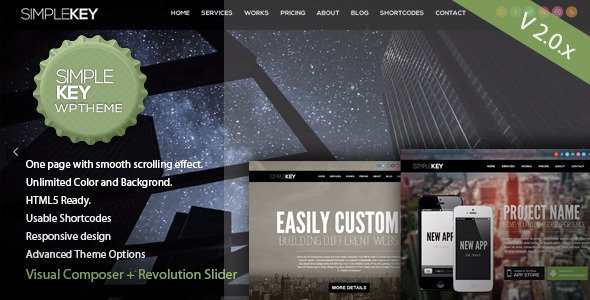
Stuck on your SimpleKey WordPress theme? Let's fix it.
No endless back-and-forth. Just send us the details and we'll get it done.
No obligation · Replies within 1 hour · Quote within 1 day
Setup · Customization · Bug fixes · WooCommerce integration
About SimpleKey WP Theme
SimpleKey is a WordPress theme by FocuxTheme built for clean, minimal sites that load fast and stay out of the way. It targets small businesses, freelancers, and portfolio owners who want a professional look without a page builder dependency.
The theme ships with a lightweight codebase, straightforward layout options, and basic Customizer controls. It works well with popular plugins and follows standard WordPress coding practices, which makes it relatively easy to extend or modify.
Where SimpleKey stands out is its focus on speed and simplicity. There are no bloated feature sets or redundant options panels. If you want a clean foundation for a business or personal site and prefer to keep things lean, SimpleKey covers the basics without adding unnecessary weight.
Get matched with a SimpleKey developer in under one day
Tell us about your SimpleKey project. Small fixes, SimpleKey theme customization, or a full website build, whatever you need, we've got it covered.
We'll connect you to the right SimpleKey developers, define the scope, and get everything 100% clear.
You'll get one estimate, hire your preferred developer, and start collaborating.
Most SimpleKey problems come down to customization limits, plugin conflicts, or layout issues that look simple but take time to trace. A vetted SimpleKey developer on Codeable has seen these problems before and can scope the work accurately from the start.
Codeable matches you with experienced WordPress specialists, not generalists. Every developer is vetted before they can take projects. You get a real estimate before committing to anything, and the work comes with accountability built into the platform.
Pros
- Lightweight codebase with minimal render-blocking scripts
- Clean Customizer integration with no proprietary page builder lock-in
- Compatible with WooCommerce, Yoast SEO, and most major plugins without conflicts
- Mobile-responsive layouts that hold up across common screen sizes
- Easy to set up a child theme for safe customization
Cons
- Limited built-in layout variety compared to multi-purpose themes
- No drag-and-drop editor included, which frustrates non-technical users
- WooCommerce templates are basic and need overrides for a custom shop look
- Documentation from FocuxTheme is minimal, making self-troubleshooting harder
- Support response times from the theme author can be slow on free plan
Who is SimpleKey for?
Freelance Portfolio
SimpleKey works well for freelancers who want a fast, clean portfolio without managing a complex theme. The minimal layout keeps the focus on work samples. A SimpleKey developer can add custom post types for projects, filter functionality, and a contact section that feeds directly into your inbox without relying on heavy plugins.
Local Service Business
Service businesses like plumbers, accountants, or consultants benefit from SimpleKey’s straightforward structure. Pages load fast, and the layout prioritises contact information and service descriptions without visual clutter. A SimpleKey specialist can integrate booking plugins, Google Maps, and local schema markup to improve visibility in local search results.
Small Online Store
SimpleKey handles WooCommerce installations for stores with modest product catalogs. The clean design keeps product pages readable. A SimpleKey expert can override default WooCommerce templates, adjust the cart and checkout flow, and connect payment gateways without introducing plugin conflicts that slow the storefront down.
Personal Blog
For personal blogs, SimpleKey’s typography-first approach keeps reading comfortable across devices. The lightweight build means pages load quickly even on slower connections. A SimpleKey developer can extend the theme with custom category templates, related posts logic, and email subscription integration without overcomplicating the setup.
Agency Landing Page
Agencies building landing pages for specific campaigns or client pitches can use SimpleKey as a fast-to-deploy base. Its minimal dependencies mean fewer points of failure. A SimpleKey specialist can build targeted page templates with conversion-focused layouts, custom sections, and tracking script integration for Google Ads or Meta campaigns.

Customizing SimpleKey
SimpleKey gives you Customizer-based controls for colors, typography, header layout, and footer content. That covers the basics, but anything beyond surface-level changes requires either custom CSS or direct template edits.
A SimpleKey expert can handle the more involved work: custom post type integration, layout modifications, child theme setup, and hooking in third-party plugins cleanly. If you need a site that matches a specific brand guide or requires features the theme does not include out of the box, working with a SimpleKey specialist saves time and avoids breaking changes.
Custom CSS goes a long way in SimpleKey, but structural changes to page templates or the header and footer areas are better handled by a developer who knows the theme’s template hierarchy and hook system.
Recommended plugins for SimpleKey
SimpleKey pairs well with WooCommerce for basic shop functionality, though you may need template overrides for a polished result. WPForms or Contact Form 7 drop in without friction. For SEO, Yoast and Rank Math both work cleanly with the theme’s schema-friendly structure. If you want to push further, a WordPress SEO specialist can configure structured data and on-page signals correctly.
On the performance side, SimpleKey’s lightweight base means caching plugins like WP Rocket or LiteSpeed Cache have more room to work. Pairing the theme with a WordPress performance service can push Core Web Vitals scores significantly higher without touching the theme core.
Not sure which plugins to use? This WordPress plugins directory covers the most popular options with reviews and setup guides.
SimpleKey common issues
SimpleKey header not showing logo after upload
This usually happens when the uploaded image exceeds the recommended dimensions set in the theme or when the header image size is not registered correctly. Go to Appearance > Customize > Site Identity and re-upload the logo at the correct size. If the image slot stays empty, check whether a caching plugin is serving a stale header. Clear all caches and test again. If the problem persists after that, a template-level conflict may be involved.
SimpleKey homepage layout broken after WordPress update
WordPress core updates can break theme layouts when the theme relies on deprecated template tags or functions removed in newer versions. Open your browser console and look for JavaScript errors or missing stylesheet calls. If you are running a child theme, verify the parent theme files are intact. Check the SimpleKey changelog for compatibility notes. If the layout is significantly broken, a WordPress bug fixing service can trace the exact conflict and restore the layout cleanly.
SimpleKey mobile menu not opening or closing
Mobile menu failures in SimpleKey are almost always a JavaScript conflict. Another plugin is likely enqueuing a jQuery version that overrides what the theme needs, or there is a script loading order problem. Open browser dev tools on mobile view and look for console errors tied to the menu toggle. Deactivate plugins one at a time to isolate the conflict. If you find the culprit but cannot resolve the script order issue yourself, a developer can fix the enqueue priority.
SimpleKey custom CSS not applying in Customizer
Custom CSS entered in the Customizer may not apply if a caching layer is serving an older version of the stylesheet, or if a child theme stylesheet is overriding the rules with higher specificity. First clear your caching plugin and any CDN cache. Then check specificity by inspecting the element in browser dev tools to see which CSS rule is winning. If you are working in a child theme, make sure the parent theme stylesheet is loaded before the child.
SimpleKey footer widgets not displaying correctly
Footer widget areas not displaying usually means the widget area is either empty, not registered correctly by the theme, or a plugin has reset widget assignments. Go to Appearance > Widgets and confirm your widgets are placed inside the correct SimpleKey footer zone. If the footer zone does not appear as an option, the theme may need a functions.php check to verify the sidebar registration is intact.
SimpleKey slow loading on mobile devices
SimpleKey has a lean codebase, so persistent mobile slowness typically points to unoptimised images, render-blocking third-party scripts, or a hosting environment that does not handle concurrent requests efficiently. Run the URL through Google PageSpeed Insights and act on the specific recommendations. Compress images, defer non-critical scripts, and enable browser caching. If scores remain low after those changes, a full WordPress performance audit will identify what else is holding the score back.
SimpleKey WooCommerce product page layout broken
SimpleKey does not include custom WooCommerce template files, so it falls back to WooCommerce defaults. If a WooCommerce update changed its template structure, the display can break. Copy the affected WooCommerce template files into a SimpleKey child theme under a woocommerce folder and modify them there. This keeps your overrides safe from future WooCommerce updates. If you are unsure which templates to copy or how to structure the child theme folder correctly, a WordPress bug fix developer can handle this quickly.
SimpleKey contact form not sending emails
Contact form email failures in SimpleKey are rarely a theme issue. They almost always come down to the server’s mail function being blocked by the hosting provider or the form plugin configuration. Install WP Mail SMTP, connect it to a transactional email provider like SendGrid or Mailgun, and test again. Also check your spam folder before assuming delivery has failed. If emails still do not arrive after SMTP setup, review the form plugin’s error logs.
SimpleKey font not changing after Customizer update
Font changes that do not appear after saving in the Customizer are typically a caching problem. Clear your caching plugin, browser cache, and any CDN cache layer. If the font still does not update, check whether the Customizer is actually saving the value by refreshing the Customizer panel itself. In some cases, a theme options conflict can prevent font settings from writing to the database correctly. Disabling other plugins temporarily helps isolate the cause.
SimpleKey white screen of death after plugin install
A white screen after installing a plugin usually means a PHP fatal error caused by a conflict. Enable WordPress debug mode by adding WP_DEBUG and WP_DEBUG_LOG constants to wp-config.php, then check the debug.log file for the exact error line. Deactivate the new plugin via FTP by renaming its folder if you cannot access the admin panel. If the white screen appeared without an obvious trigger, a WordPress bug fixing specialist can review server error logs and resolve the conflict efficiently.
SimpleKey FAQ
SimpleKey by FocuxTheme is available as a free theme through the WordPress.org repository. Some extended features or premium support may be offered separately by FocuxTheme, but the core theme installs at no cost. Check the FocuxTheme website directly for any premium add-on or pro version details, as these change over time.
SimpleKey is compatible with the Gutenberg block editor and works with most block-based layouts without issues. Elementor can be installed alongside it, though some full-width layout options may need CSS adjustments to align with the theme’s container widths. A SimpleKey developer can handle those overrides if the default spacing causes visual inconsistencies.
Create a new folder in wp-content/themes named simplekey-child. Add a style.css file with the required header declaring it as a child of SimpleKey, then add a functions.php file that enqueues both the parent and child stylesheets. Activate the child theme from Appearance > Themes. All customizations go into the child theme files to survive parent theme updates.
Yes, SimpleKey is compatible with WooCommerce. It handles basic shop, product, and cart pages using WooCommerce’s default templates. The design integration is functional but plain. If you need a more polished storefront appearance, template overrides inside a child theme or help from a SimpleKey specialist will produce a cleaner result.
SimpleKey suits small business websites well, particularly service-based businesses that need fast load times and a clean layout. It works best for sites with a limited number of page types. For complex business sites with multiple custom sections, integrations, or heavy content structures, additional development work from a SimpleKey expert is recommended.
Always run theme updates through a child theme setup so your modifications are stored separately from the parent theme files. Before updating, back up the site via your host or a plugin like UpdraftPlus. Test the update on a staging environment first if one is available. Direct edits to parent theme files will be overwritten on every update.
SimpleKey is built to be responsive, so mobile display issues are usually caused by custom CSS that introduces fixed widths, a plugin adding non-responsive elements, or a third-party embed breaking the viewport. Use browser dev tools in mobile view to inspect which element is causing the overflow. Removing or adjusting the conflicting rule usually resolves it.
SimpleKey does not have known conflicts with WPML or Polylang. Both multilingual plugins work at the WordPress core level and do not depend on theme-specific features. For a full multilingual setup, a developer familiar with both SimpleKey and WPML can ensure translated pages render correctly and that language switcher elements are placed properly in the theme layout.
The simplest method is to enqueue Google Fonts from your child theme’s functions.php using wp_enqueue_style with the Google Fonts API URL. Then apply the font family via CSS to the elements you want to change. If SimpleKey’s Customizer includes a font selector, check whether it already pulls from Google Fonts before adding a manual enqueue to avoid loading the same font twice.
Codeable is the most reliable option for hiring a vetted SimpleKey developer. All developers on the platform are screened before they can take projects, and you receive a clear estimate before committing. Post your project at Codeable or use the free estimate form to describe what you need and get matched with a specialist.
Hire a SimpleKey Expert Developer
If your SimpleKey site needs custom work, a conflict fixed, or a layout that the Customizer cannot produce on its own, a specialist will get it done faster and cleaner than trial and error. Get a Free Estimate and describe what you need. A vetted SimpleKey developer will review the project and send you a clear scope and price before any work begins. No obligation, no risk.
You'll need a free Codeable account so developers can ask questions and send their quotes.