Pin = Pinterest Style / Personal Masonry Blog / Front-end Submission WordPress Theme
by An-Themes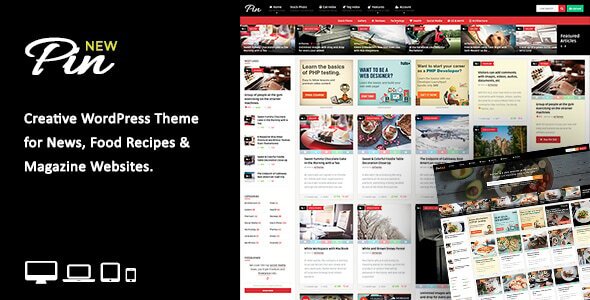
Stuck on your Pin = Pinterest Style / Personal Masonry Blog / Front-end Submission WordPress theme? Let's fix it.
No endless back-and-forth. Just send us the details and we'll get it done.
No obligation · Replies within 1 hour · Quote within 1 day
Setup · Customization · Bug fixes · WooCommerce integration
About Pin = Pinterest Style / Personal Masonry Blog / Front-end Submission WP Theme
Pin is a Pinterest-style masonry blog theme by An-Themes, built for bloggers who want a visual, grid-based layout with front-end submission capabilities. It creates a dynamic, image-driven feed where posts stack in a fluid masonry grid, similar to how Pinterest presents content.
The theme supports front-end post submission, which means visitors can contribute content directly from the site without accessing the WordPress dashboard. This makes Pin a practical choice for community blogs, niche content hubs, and personal portfolio sites where user-generated content adds value.
Built on a clean codebase, Pin includes widgetized areas, multiple post formats, and a responsive layout that adapts across screen sizes. An-Themes has kept the design minimal, letting the imagery do the work while keeping load times reasonable for a media-heavy layout.
Get matched with a Pin = Pinterest Style / Personal Masonry Blog / Front-end Submission developer in under one day
Tell us about your Pin = Pinterest Style / Personal Masonry Blog / Front-end Submission project. Small fixes, Pin = Pinterest Style / Personal Masonry Blog / Front-end Submission theme customization, or a full website build, whatever you need, we've got it covered.
We'll connect you to the right Pin = Pinterest Style / Personal Masonry Blog / Front-end Submission developers, define the scope, and get everything 100% clear.
You'll get one estimate, hire your preferred developer, and start collaborating.
Pin has more moving parts than a standard blog theme. The masonry grid, front-end submission system, and user role management all interact in ways that can cause unexpected issues without the right setup. A vetted developer on Codeable who knows Pin can configure the theme correctly from day one, avoiding the trial-and-error that wastes time. Whether you need a custom submission workflow, a refined grid layout, or performance tuning on a growing content site, working with a specialist is faster and more reliable than figuring it out alone.
Pros
- Built-in front-end submission lets visitors post content without touching the WordPress admin
- Masonry grid layout handles mixed image sizes naturally without manual cropping
- Multiple post formats supported, including standard, image, gallery, and video
- Minimal base design keeps the focus on imagery and is easy to brand
- Responsive grid reflows cleanly across mobile, tablet, and desktop
Cons
- Front-end submission setup is not beginner-friendly and requires careful user role configuration
- Limited built-in moderation tools for managing user-submitted content at scale
- Masonry layout can conflict with certain page builders or block editor columns
- An-Themes update frequency has slowed, which can create compatibility gaps with newer WordPress versions
- Documentation is sparse, making advanced customisation harder without developer experience
Who is Pin = Pinterest Style / Personal Masonry Blog / Front-end Submission for?
Personal Photography Blog
Pin’s masonry grid handles portrait and landscape photos side by side without awkward white space. Photographers can post shoots as galleries or single images, letting the grid act as a living portfolio. The clean card design keeps attention on the images rather than interface elements.
Community Recipe Site
A recipe community site benefits directly from Pin’s front-end submission feature. Home cooks submit recipes with photos, and moderators approve before publishing. The masonry layout makes browsing by visual appeal natural, which suits food content where the image drives the click.
Fashion Mood Board Blog
Fashion bloggers curating outfit ideas, mood boards, or lookbooks get a Pinterest-like browsing experience without relying on an external platform. Posts can be tagged by season, style, or brand, and the grid updates dynamically as new content is added.
Travel Photo Journal
Travel journals with varied photo ratios from different destinations display well in Pin’s fluid grid. Each post card can include a destination tag, short summary, and featured image. The layout encourages exploration by showing multiple posts at once without a fixed row structure.
Niche Content Curation Hub
Sites that aggregate niche content, such as design inspiration, architecture, or street art, can use Pin’s front-end submission to let community members contribute finds. With proper moderation in place, the site grows through user input while the masonry grid keeps the visual experience consistent.

Customizing Pin = Pinterest Style / Personal Masonry Blog / Front-end Submission
Customizing Pin goes well beyond toggling colors in the WordPress Customizer. The masonry grid behaviour, card spacing, column counts, and front-end submission form fields all require careful configuration to match your brand and content structure.
A Pin theme expert can set up the front-end submission system so users submit posts with the right fields, categories, and moderation rules in place. They can also integrate plugins for user registration, content approval workflows, and spam filtering without breaking the grid layout.
Custom post card designs, sticky sidebars, infinite scroll, and conditional display logic for different post formats are all common requests. Getting these working cleanly inside Pin’s masonry structure takes someone who knows the theme’s template hierarchy and CSS architecture well.
Recommended plugins for Pin = Pinterest Style / Personal Masonry Blog / Front-end Submission
Pin works well with a focused set of extensions. Adding a caching plugin like WP Rocket improves grid load performance, especially on image-heavy boards. For community submission sites, WPForms or Gravity Forms can replace the default submission form with more control over fields and validation.
Pairing Pin with an SEO plugin helps structure category and tag archive pages, which carry a lot of traffic weight on masonry blogs. A CDN handles image delivery across the masonry grid efficiently. For sites scaling up, a WordPress performance audit and SEO optimisation are worth considering early.
Not sure which plugins to use? This WordPress plugins directory covers the most popular options with reviews and setup guides.
Pin = Pinterest Style / Personal Masonry Blog / Front-end Submission common issues
Pin theme masonry grid not loading correctly after WordPress update
Masonry grid issues after a WordPress update are usually caused by a JavaScript conflict or a change in how scripts are enqueued. Start by deactivating all plugins and switching to Pin temporarily to isolate the cause. Check the browser console for JS errors pointing to the masonry or isotope library. Clearing the site cache and regenerating CSS files often resolves it. If the issue persists, a WordPress bug fixing service can trace the exact conflict.
Front-end submission form not showing on Pin theme
If the front-end submission form is missing, the most common causes are a shortcode placed incorrectly, a user role restriction blocking the form display, or a plugin conflict with the form rendering script. Check the page template assigned to the submission page and confirm the correct shortcode is present. Also verify that the user role settings in Pin’s options allow the intended audience to see and use the form.
Pin theme posts overlapping in masonry layout on mobile
Post overlap on mobile in a masonry layout usually means the JavaScript that calculates grid positions is firing before images have fully loaded. This is a known issue with masonry scripts that don’t use imagesLoaded as a dependency. The fix involves either updating the script loading order in the theme’s functions.php or adding imagesLoaded as a dependency. A developer familiar with Pin can apply this without breaking the desktop layout.
User submitted posts not appearing after approval in Pin theme
When approved posts don’t appear in the grid, the issue is typically a post status mismatch. Pin’s submission system may set posts to a custom status on submission, and the approval action needs to transition them to published correctly. Check the post status in the database and confirm the approval workflow in Pin’s settings matches your expected publishing behaviour. Plugin conflicts with custom post statuses can also cause this.
Pin = Pinterest Style / Personal Masonry Blog / Front-end Submission FAQ
Pin includes a built-in front-end submission system that lets logged-in users submit posts from a dedicated page on your site. You place a shortcode on a page, and a form appears where users can add a title, content, images, and categories. Posts go into a pending or draft state until you approve and publish them from the WordPress dashboard.
Pin is not built for page builders. Its masonry grid relies on its own template structure, and introducing Elementor or WPBakery into that can break the grid layout or create rendering conflicts. Some developers have integrated page builders on specific inner pages while keeping Pin’s grid templates intact, but it requires careful handling and is not a straightforward out-of-the-box setup.
An-Themes update activity for Pin has been inconsistent. The theme still works on current WordPress versions but may require manual fixes as WordPress evolves. If you’re building a long-term site on Pin, factor in the cost of occasional developer attention to keep it compatible, or consider whether a more actively maintained theme would reduce that overhead.
Column count in Pin’s masonry grid is typically controlled through the theme options panel or via CSS breakpoints in the theme’s stylesheet. You can adjust column widths using CSS targeting the masonry item class. Some column configurations are also tied to the widget sidebar state, so enabling or disabling the sidebar affects how many columns the grid displays.
Pin can handle a growing volume of submissions with the right setup. You’ll want a caching solution, image optimisation, and a clear moderation workflow in place before traffic scales. The default theme setup is not optimised for high-volume community sites out of the box, but with proper hosting and performance configuration it holds up well for mid-sized content communities.
Hire a Pin Theme Developer or Front-End Submission Expert
Getting Pin set up the right way means more than just installing the theme. The masonry grid, front-end submission forms, user moderation, and custom styling all need to work together without conflicts. Our developers know the Pin theme inside out and can build exactly what your blog or community site needs. Get a free estimate with no obligation. You’ll hear back within 24 hours.
You'll need a free Codeable account so developers can ask questions and send their quotes.